

Video
The NANO ACi technique: supporting cartilage repair and regeneration
Consultant orthopaedic surgeon and internationally recognised specialist in cartilage repa...
Professor Paul Lee is a consultant orthopaedic surgeon and internationally recognised specialist in cartilage repair, joint preservation and regenerative orthopaedics. He practises at the London Cartilage Clinic on Harley Street — accredited by the International Cartilage Regeneration & Joint Preservation Society (ICRS) as a Teaching Centre of Excellence, where surgeons train in cartilage and joint preservation surgery — alongside his MSK Doctors clinics in Lincolnshire, caring for patients from across the UK and internationally. His entire practice is built around a single question: can your joint still be saved before replacement?
Not every patient is the same, and not every joint should be placed on a standard pathway. Many people arrive having been told a new knee or hip is their only option; Professor Lee offers specialist second opinions and explains the alternatives to all joint replacement — what may still be preserved, what may still be repaired, and where regeneration may still have a role. His guiding framework is simple: preserve, repair, regenerate — and replace only when truly needed.
In 2026, the British Orthopaedic Association awarded Professor Lee the Robert Jones Medal and Association Prize, one of the BOA's flagship honours — named after the founding father of modern British orthopaedics and recognising outstanding contribution to clinical practice, research and academic thought. It crowned a career that also includes 20 years of NHS service, formally recognised with the NHS Long Service Award in 2026. In October 2026 he is due to bring this message to the public stage with an invited TEDx talk on the regeneration revolution.
Professor Lee offers an exceptionally broad portfolio of joint preservation treatments, matched to each patient rather than applied as a one-size-fits-all fix. He was the first surgeon in the UK to use Arthrosamid for knee osteoarthritis and has now performed more than 1,000 treatments; he pioneered the Liquid Cartilage technique, combining a ChondroFiller collagen scaffold with the patient's own biology and designed to help repair damaged cartilage without major surgery; and his single-stage STACi procedure uses the patient's own cartilage cells in one operation instead of the traditional two-stage approach. These sit alongside image-guided injections including platelet-rich plasma (PRP), platelet-rich fibrin (PRF) and cell-based therapies — the right injection, at the right time, into the right joint.
Building on this work, he developed NanoACi, a single-stage, needle-delivered approach to cartilage repair. It combines small fragments of the patient’s own cartilage, known as micrografts, with a supporting collagen scaffold and platelet-rich plasma (PRP) prepared from the patient’s blood. Treatment is selected following an individual assessment, with the aim of supporting cartilage repair and joint preservation. Outcomes for the combined technique are being evaluated through follow-up.
When surgery is the right answer, the same preservation-first thinking applies. For ACL and sports knee injuries, Professor Lee developed STARR (Single Treatment ACL Regenerative Repair), which, in suitable injuries, aims to preserve and repair the patient's own ligament without taking a tendon graft from the leg; he is one of the UK's leading exponents of the muscle-sparing SPAIRE hip replacement, which spares the deep tendons — an approach designed to support an earlier, more confident recovery; and his TWIS-TKR knee replacement technique is designed around the natural movement pattern of the patient's own knee. In his practice, recovery is part of the operation — structured, measured and personally supervised — not an afterthought.
Supporting these treatments, his RegenRepair™ pathway brings together assessment, biological preparation, personalised treatment, rehabilitation and measured follow-up. Recovery is planned as part of the treatment process, with progress reviewed over time through changes in symptoms, movement and everyday function.
A surgeon, scientist and engineer, Professor Lee holds a PhD in medical engineering and is Honorary Professor of Sports Medicine at the University of Lincoln. He has over 100 peer-reviewed publications, is Editor-in-Chief of Springer Nature's Musculoskeletal Regeneration Medicine, and is the author of Regeneration by Design, an Amazon #1 category bestseller.
Alongside his clinical and academic work, he serves as Founding President of I AM Regen, the International Association of Musculoskeletal Regeneration. The association brings clinicians and scientists together to support education, research, collaboration and the development of professional consensus in musculoskeletal regeneration.
Building on his engineering background, Professor Lee founded the MSK Computer Vision Lab and developed MAI Motion, a camera-based system that uses artificial intelligence to analyse movement without wearable markers. Its measurements can support clinical assessment and help track changes in physical function during recovery. His imaging research includes onMRI, which explores quantitative analysis of musculoskeletal MRI, including cartilage and the meniscus, to develop detailed measurements for research into joint health.
Trusted by elite athletes — from Premier League footballers to Olympic medallist Sharron Davies MBE — he welcomes patients seeking treatment or a specialist second opinion on complex knee, hip and cartilage problems, in person in London and Lincolnshire or by remote consultation for international patients.
His main areas of expertise include:

Medical insurances accepted


Video
Consultant orthopaedic surgeon and internationally recognised specialist in cartilage repa...

Article
In this article, esteemed consultant orthopaedic surgeon, Professor Paul Lee, shares his e...

Video
Get a taste of a patient consultation with Professor Paul Lee, consultant orthopaedic surg...

Article
The TWIS-TKR (Turn with Intelligent Stability Total Knee Replacement) technique in knee re...

Video
Compartment syndrome

Article
In his latest online article, Professor Paul Lee gives us his insights into The SPAIRE tec...

Video
Both Knee high tibial osteotomy (HTO) surgery with Professor Lee, MSK Doctors. Patient's j...

Article
Anterior cruciate ligament (ACL) injuries are extremely common, and are often sustained by...

Video
Autologous chondrocyte implantation (ACI) is a new, state-of-the-art procedure in cartilag...

Article
If you are planning to get the meniscus tear in your knee repaired you might be worried ab...

Video
Liquid cartilage replacement is a minimally-invasive procedure which can help to replace a...

Article
Nowadays, hip replacement recovery is faster than ever. Of course, for many people the big...

Video
In one of today's online interviews, Professor Paul Lee, a highly regarded consultant orth...

Article
A hip replacement is a life-changing operation. It can significantly improve your quality ...

Video
In our latest online interview, esteemed London-based consultant orthopaedic surgeon, Prof...

Article
The unloader knee brace is designed to reduce the pressure on one side of the knee and can...

Video
In our latest online interview, highly experienced consultant orthopaedic surgeon, Profess...

Article
Playing sports can of course be good fun, but they are also a big cause of injuries. These...
Video
Should steroids be used to treat osteoarthritis? Leading sports medicine specialist and or...

Article
Knee pain is a common ailment and source of discomfort for the UK’s population, related to...
Video
Find out all about platelet-rich plasma (PRP) and what it can be used to treat with double...
Video
Join top sports medicine specialist and orthopaedic surgeon Professor Paul Lee, who explai...
Video
Can we use the body's own biology to treat osteoarthritis? Discover cell therapy, includin...
Video
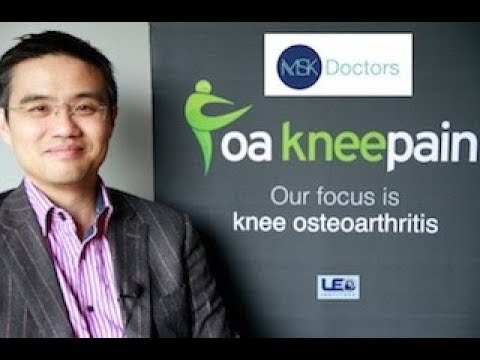
Prof Paul Lee is an expert in the treatment of knee pain. MSK doctors offer effective trea...
Video
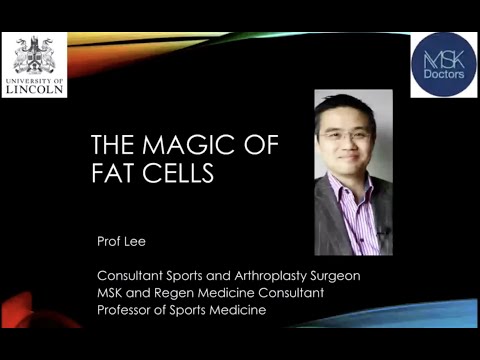
In this webniar Prof Lee is going to talk about magic of fat cells. At the end of it we h...
Video
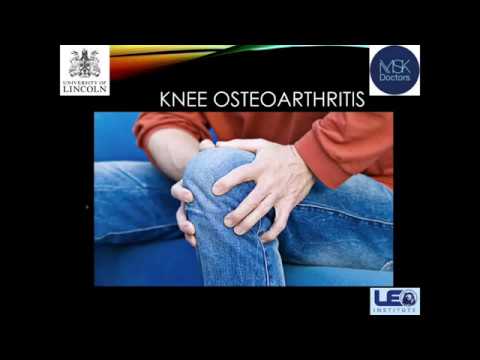
Prof Lee from MSK Doctors explained and discussed the principle of Cell Therapy in oestoar...
Video
MSK Sports Medicine Update - Prof Paul Lee Knee Replacement, what is the result? What is t...